
When Off-the-Shelf Software Stops Fitting Your Business
Off-the-shelf software is built for the average case. It’s designed to handle what most businesses in your industry need, most of the time. That’s a reasonable value proposition when you’re starting out, and it works well enough until your operations get specific enough that the gaps start to cost you.
The transition isn’t dramatic. It’s gradual. You start keeping a spreadsheet to handle the thing the software can’t do. Then another one. You build a manual step into the workflow because the export from one system doesn’t match the import format of the next. You hire someone whose real job, if you look at it honestly, is keeping the system fed rather than doing the work the business actually needs done. At some point the software you bought to solve a problem has become the problem, and the workarounds you’ve layered on top of it are holding the whole thing together.
What This Looks Like in Practice
The signs are usually obvious once you know what to look for. The team has a shared spreadsheet that everyone treats as the real source of truth even though the software is supposed to handle that function. Data gets entered twice because two systems that should talk to each other don’t. Reports take hours to produce manually because the software can’t output them the way the business actually needs them. Someone leaves the company and you discover that a significant piece of your operational knowledge lived in their head because the system never captured it properly.
None of this is unusual. Most growing businesses go through it. The question isn’t whether it’s happening, it’s how much it’s costing you in time, errors, and the opportunities you’re too slow to catch because your processes can’t keep up.
There’s also a vendor problem that doesn’t get discussed enough. When you depend on off-the-shelf software, your roadmap is their roadmap. Features get added when they serve the majority of the customer base, not when your specific operation needs them. You end up paying for modules you’ll never use while the thing your workflow actually requires sits in a feedback forum somewhere with 40 upvotes and no timeline.
Recognize These Problems?
If your team is building workarounds instead of doing their jobs, it's worth a conversation about what software actually built for your business would look like.
Free consultation. No obligation.
Let's talk
When Custom Software Is the Right Answer
Custom software is not the right answer for every situation, and we’ll tell you that directly if it applies to you. If your processes are genuinely standard and well-served by existing tools, there’s no reason to build something from scratch. But when your operations have enough specificity that no off-the-shelf product fits cleanly, or when the integration requirements between your systems are complex enough that you’re spending real money maintaining fragile connections, the economics of custom development start to look different.
The comparison most businesses make is wrong. They look at the upfront cost of custom software against the monthly subscription cost of what they already use. The real comparison is the total cost of the off-the-shelf solution including staff time spent on workarounds, error correction, manual reporting, and the integrations you’ve had to build anyway to make it function. When you add those up honestly, custom software often becomes the cheaper option over a three-to-five year window.
There’s another factor that doesn’t show up in a spreadsheet: what your operations could do if the software was actually built around your workflow instead of the other way around. Some businesses find that the right system changes what’s possible, not just what’s efficient.
How We Approach It
We build custom backend systems and mobile applications. Our approach isn’t to replace everything on day one. We start by understanding how your business actually works, where the friction lives, and what success looks like in concrete terms. From there we design systems that address real problems rather than impressive ones.
We rely heavily on robust open source tools where they fit the job. This matters because it keeps costs down and avoids the vendor lock-in that creates problems down the road. When your business logic is built on open, well-maintained foundations rather than proprietary platforms with their own licensing clocks running, you have more control over your own trajectory. We’re not opposed to commercial tools when they’re the right fit, but we don’t default to them when the open source alternatives are stronger and more flexible. When systems need to talk to each other, we also handle the API and EDI integrations that make that happen cleanly.
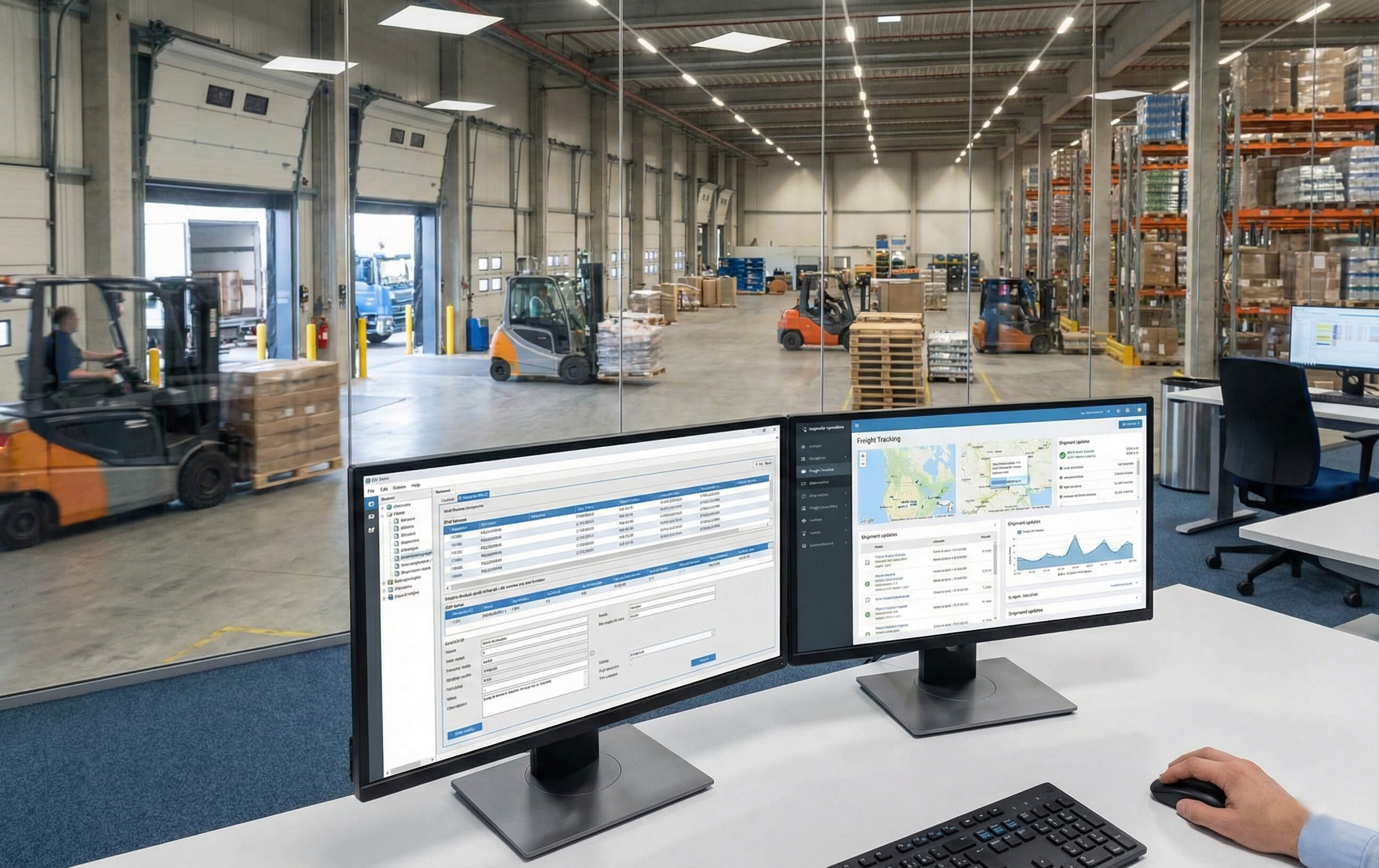
Our work with DNA Supply Chain Solutions is a good example of what this looks like in practice. DNA was managing international freight movements through a combination of emails, phone calls, and manual data entry. Tracking cargo from factory to destination was slow, error-prone, and invisible to clients who needed real-time answers. We built SAMMIE, a purpose-built freight visibility platform that centralizes data from multiple sources, automates communication across the supply chain, and gives every stakeholder live visibility into shipment status at every stage. DNA operates SAMMIE as the backbone of their freight visibility offering today. The platform replaced their manual processes with automated data flow that scales with volume without adding headcount, and it helped position them for their current growth chapter. See the full case study.
What Good Custom Software Actually Delivers
The immediate benefit is obvious: software that does what your business needs without the workarounds. But the compounding benefit is what makes it worth the investment. When your tools are built around your workflow, your team spends their time doing real work rather than managing the limitations of the system. Reporting that used to take hours happens automatically. Data that used to live in spreadsheets or people’s heads gets captured where it belongs. Integrations that used to be fragile manual processes run reliably in the background.
Over time, a well-built system also becomes an asset. It captures operational knowledge. It creates consistency. It lets you bring new people up to speed faster because the process is encoded in the software rather than passed down informally. When you eventually want to sell the business or bring on investors, documented, automated operations with clean data are worth more than a tangle of workarounds held together by institutional memory.
What to Do If This Sounds Familiar
The first step is usually a conversation where we look at what you’re working with, understand where the friction is, and figure out whether custom software is actually the right answer. Sometimes it is. Sometimes the problem is that you need a better off-the-shelf option, or a targeted integration, or a different configuration of what you already have. We’ll tell you what we see.
If custom development does make sense, we’ll outline what it would take, what a reasonable timeline looks like, and what success would mean in practical terms for your operation.
Book a free consultation and let’s start with your actual situation.
Ready to Build Something That Fits?
We help businesses move past the limitations of software that was never built for them. The first step is understanding your workflow and what's slowing you down.
Free 1-2 hour working session. Honest recommendations.
Book a consultation